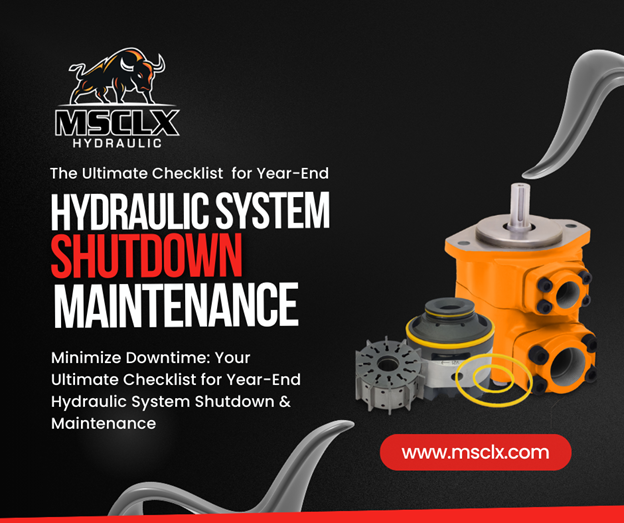
The Ultimate Checklist for Year-End Hydraulic System Shutdown & Maintenance.

Minimize Downtime

The close of the year is more than just holidays; it’s the critical window for scheduled maintenance and fleet preparation. For industrial, construction, and agricultural operations, proper hydraulic system shutdown isn’t just a good practice—it’s the difference between a smooth Q1 start and costly emergency downtime.

Use this checklist to ensure your MSCLX and compatible hydraulic systems are maintained, protected, and ready to deliver peak performance come January.

1. The Shutdown & Safety Protocol

The first and most important step is ensuring the system is shut down safely.

  • De-pressurize the System: Completely release all residual pressure from the accumulator, cylinders, and lines. Lock out/Tag out (LOTO) all power sources to prevent accidental start-up.
  • Secure Actuators: Ensure all hydraulic cylinders and actuators are retracted or secured to prevent movement due to temperature changes or accidental bumping.
  • Visual Inspection: Conduct a thorough walk-around inspection. Look for obvious signs of external leaks, chafing hoses, loose fittings, or cracked welds. Mark any area needing repair for the maintenance phase.
2. Fluid and Filtration Assessment

Hydraulic fluid is the lifeblood of your system. Contaminated or degraded fluid is the number one cause of component failure.
  • Fluid Sampling: Take a representative fluid sample for laboratory analysis. This test will reveal critical data on fluid cleanliness (ISO code), water content, and the presence of wear metals (like iron, copper, and chromium) that indicate component breakdown.
  • Filter Replacement: Always replace all hydraulic filters (return line, pressure line, breather) during a major shutdown. A fresh start prevents contaminants from being immediately reintroduced.
  • Reservoir Cleaning: If the lab analysis suggests high sludge or sediment, consider a full reservoir clean and replace the fluid with a quality, seasonally appropriate grade.
3. Component Inspection and Repair (Focus on High-Wear Parts)

Focus your attention on components that experience the most stress—like your vane pumps and cartridges.

  • Pump Cartridge Check: If your system uses high-performance vane pumps (like the MSCLX range), inspect the cartridge kits. If you are experiencing noise, heat, or efficiency loss, this is the time to replace the cartridge kit rather than the entire pump. (Pro Tip: Stock up on MSCLX high-wear cartridges now to save time and money on Q1 emergencies.)
  • Hose & Fitting Integrity: Check all hoses for bubbles, hardening, or abrasion near connections. Replace any hose that shows signs of aging. Tighten but do not over-torque fittings—a common cause of leaks.
  • Heat Exchanger Clean: Clean the fins on air-to-oil coolers and flush oil-to-water exchangers to ensure optimal heat dissipation and prevent overheating in the new year.
4. Documentation and Storage

Finish the year strong by ensuring all maintenance records are updated.

  • Update Logs: Record all actions taken, parts replaced (including MSCLX part numbers), fluid changes, and lab analysis results. This data is vital for predictive maintenance planning next year.
  • Protect Against Corrosion: For systems being stored outdoors or in unheated areas, apply a thin layer of grease to exposed cylinder rods and ensure the reservoir is full to minimize air exposure and condensation.

💡 MSCLX Recommendation: Don’t wait for a failure in Q1. Use the year-end pause to conduct a deep inspection and use your remaining budget to purchase MSCLX replacement cartridges and spares via our Year-End Bundles. Reliability starts now.